
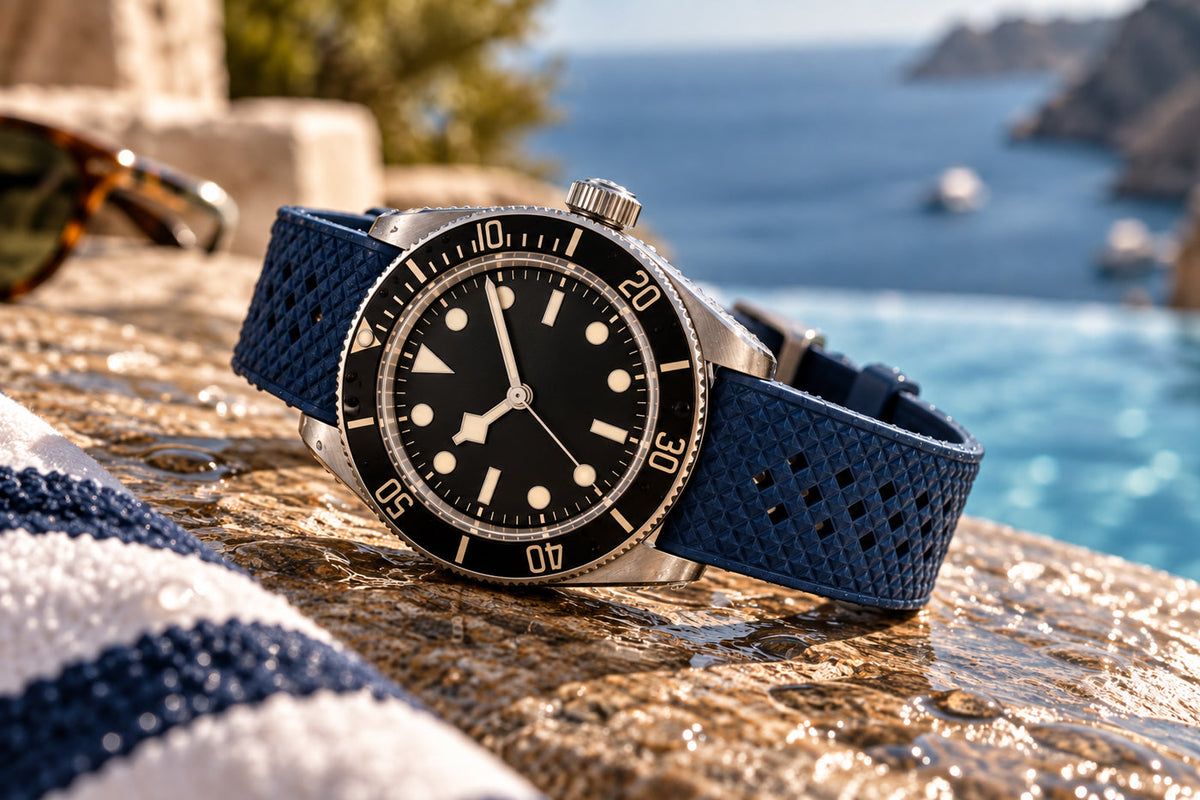
Can you wear your watch in the shower, at the pool or on holiday? The short answer: it depends on your watch’s water resistance rating, and on the strap you’re wearing. Here’s a clear, no-nonsense guide to keeping your watch safe around water, whatever the time of year.
Pictured: our Hex FKM Quick Release Rubber Navy Watch Strap, a fully waterproof strap that’s ideal for swimming.
First things first: check the water resistance
Look on the case back or in the manual for a rating. It’ll usually say ATM, bar, metres or ‘Water Resistant’.
- 3 ATM / 30m: OK for hand-washing and light splashes. Not for showering or swimming.
- 5 ATM / 50m: Fine for splashes and light swimming. Not ideal in the shower (more on that below).
- 10 ATM / 100m: Good for regular swimming and snorkelling.
- 20 ATM / 200m: Great for serious water time, including snorkelling and some recreational diving (check your brand’s guidance).
- Dive-rated (ISO 6425): Built for diving, with extra testing and seals.
Helpful tip: ‘30m’ doesn’t mean you can dive to 30 metres. It’s a lab rating under gentle, static pressure, not real-world activity. Hot water, soap and movement all put extra stress on the seals.
Showers: the hidden troublemakers
Even if your watch says 50m, showers can be harsh because:
- Heat expands the seals and can let steam in.
- Soap and shampoo reduce water’s surface tension, making it easier to sneak past gaskets.
- Sudden temperature changes can pull moisture inside.
Our take: if you love your watch, take it off before showering. If you forget now and then, a modern watch rated 5 ATM or more will probably be fine, but it’s not ideal long term.
Swimming: what’s safe, what’s not
Whether it’s lengths at the gym, swimming lessons or a dip on holiday, here’s how to keep things worry-free:
- Pool swims: 5 ATM is the bare minimum; 10 ATM is better, as chlorine can be tough on seals and straps.
- Open water: go for 10 ATM or more to cope with waves and stronger movement.
- Snorkelling: 10 to 20 ATM recommended.
- Diving: choose a proper dive-rated watch.
After any swim, rinse your watch and strap in fresh water, then dry them with a soft cloth.
The strap matters as much as the watch
Your watch might be water resistant, but not every strap is made for soaking, especially once sweat, suncream, salt and chlorine are in the mix.
- Silicone and rubber: the best choice for water. Soft, durable and genuinely waterproof, and easy to rinse after the pool or the sea.
- Nylon (NATO/Zulu): handles water well and dries fairly quickly. Rinse after sea or pool use, and rotate it if it gets sweaty.
- Metal bracelets: fine in water, but rinse thoroughly and dry to prevent residue and keep the links moving smoothly.
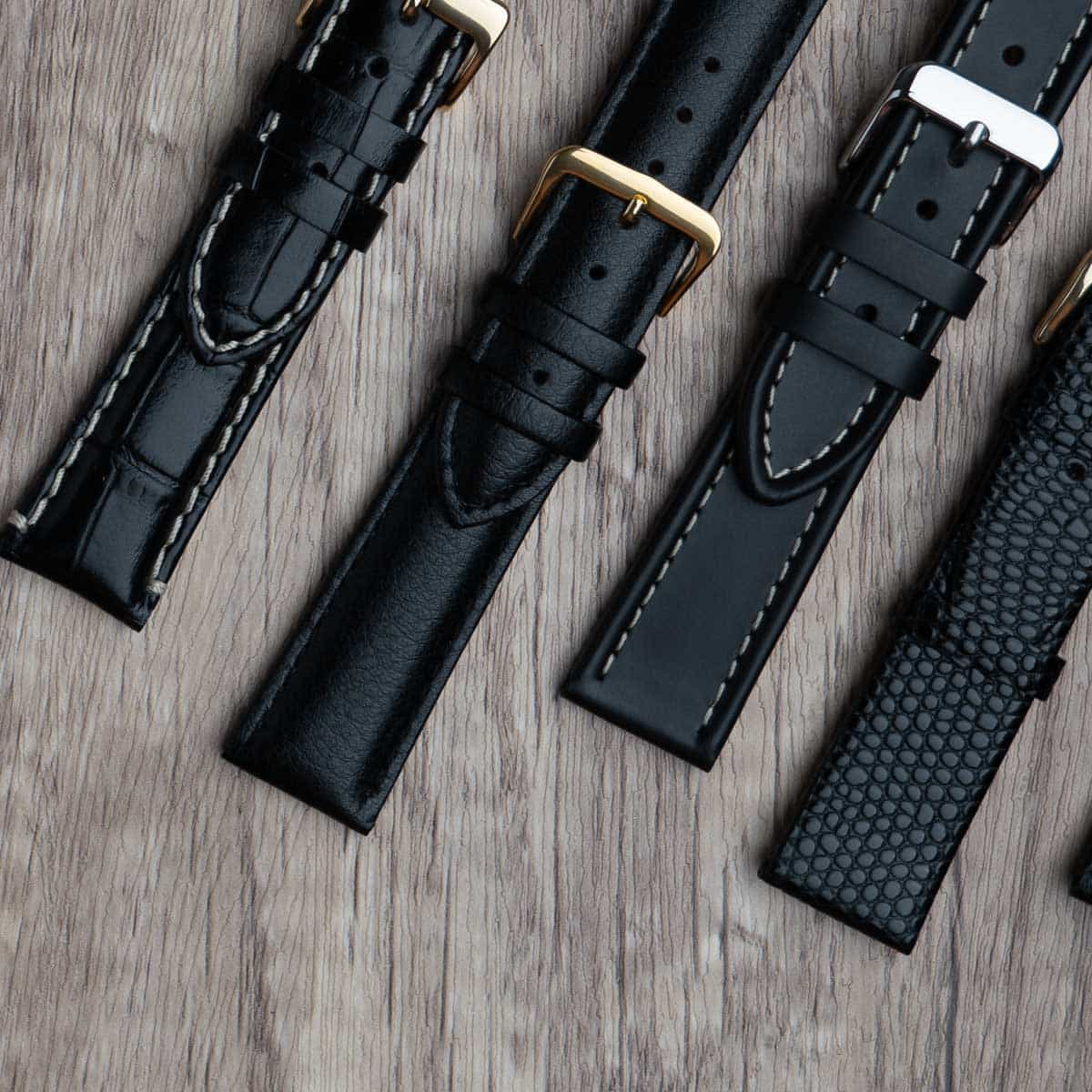
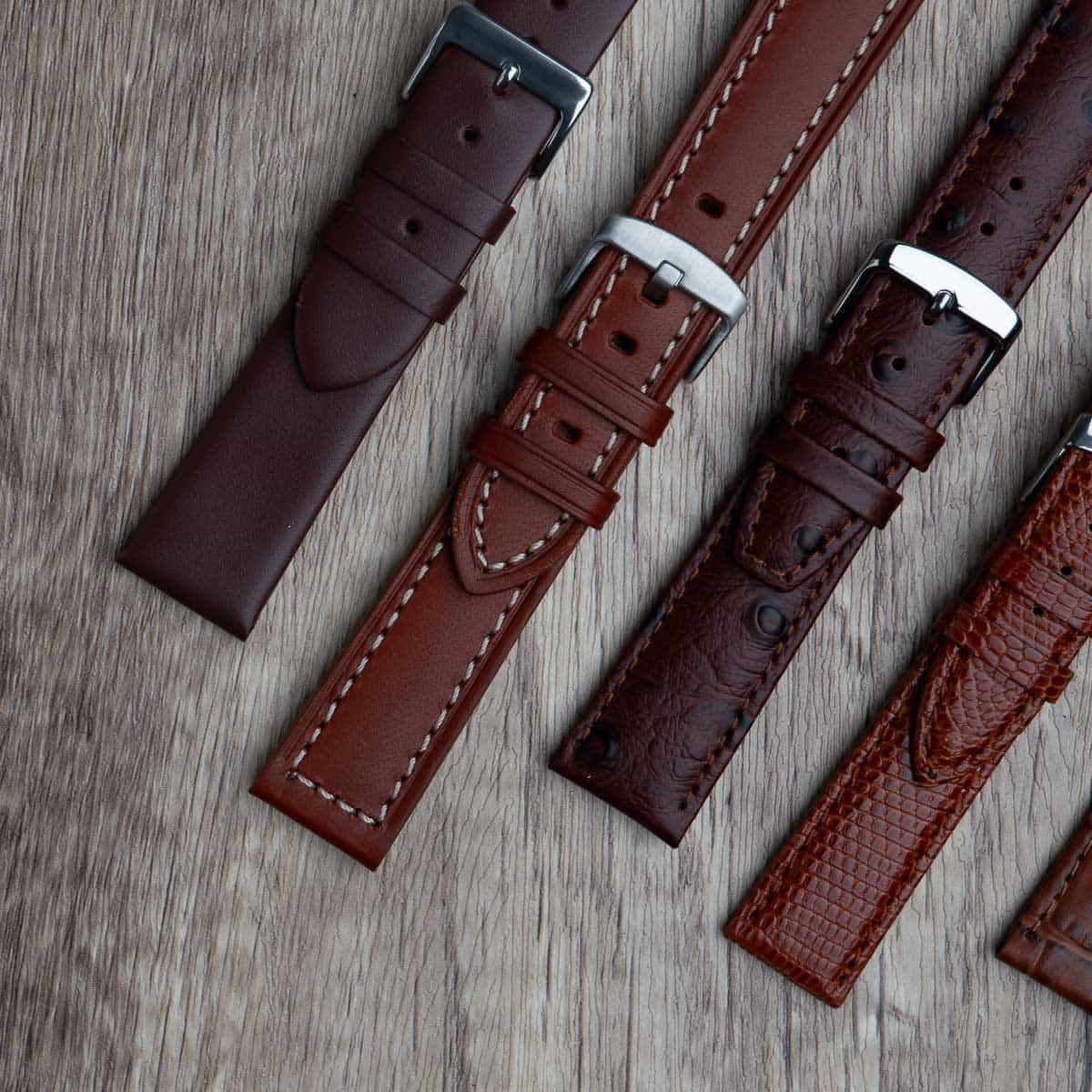
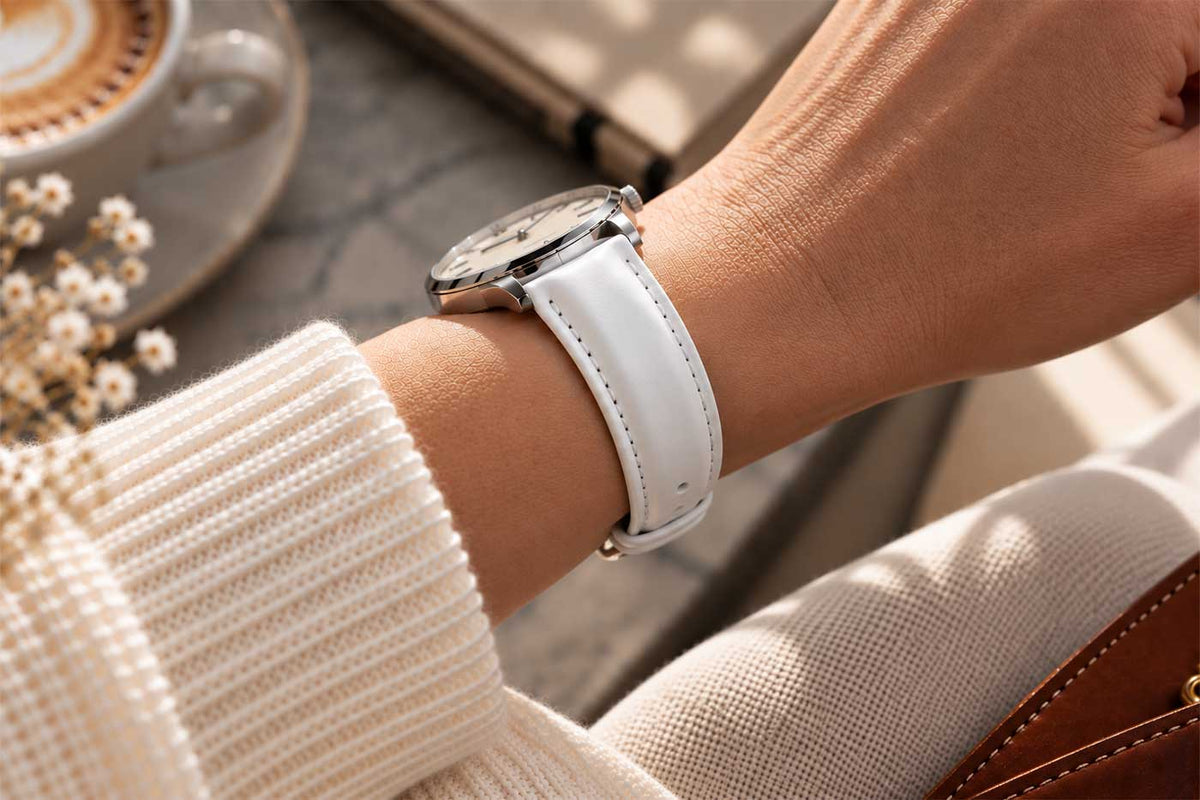
- Leather: not water friendly. Sweat, splashes and soaking all speed up wear and odour. Keep it for dry days; our leather watch strap guide has more on looking after it.
- Suede and exotic skins: avoid water altogether.
Off to the pool, the gym or a beach holiday? Swap to silicone or nylon for the day. With quick-release spring bars it’s a 10-second change, and our guide on how to replace a watch strap covers standard spring bars too.
Smartwatches and water
Many popular smartwatches are rated 5 ATM or more, but soap, hot water and steam still aren’t recommended. Watch out for sweat and suncream building up around speakers, mics and charging contacts too, and always check the brand’s guidance. If you swim with your smartwatch, a silicone band is the easy choice: see our Apple Watch straps and Garmin watch straps.
Water-friendly care tips
- Rinse after sea or pool swims to remove salt and chlorine.
- Wipe away suncream and sweat, as both can degrade straps over time.
- Avoid using the crown or pushers underwater unless your watch is designed for it.
- Have the seals and gaskets replaced at routine services, and get a pressure test every year or two, or before a holiday.
- If you spot fog under the crystal, get it checked straight away.
Quick answers
Can I shower with a 50m watch?
You can, but it’s not ideal. Heat and soap aren’t friendly to seals, so it’s better to take it off.
Can I swim with a 100m watch?
Yes, that’s a good choice for regular swimming and snorkelling.
What’s the best strap for swimming?
Silicone or rubber for all-round performance, nylon for quick-dry practicality, or metal if you prefer a bracelet look (rinse it well).
How can I tell if my strap is waterproof?
Check what it’s made of first. Our guide on how to tell if your watch strap is waterproof goes through each material.
Ready for a water-friendly strap?
Browse our waterproof watch straps, including silicone, rubber and quick-dry nylon in most standard widths. Not sure what size you need? Our guide on how to measure a watch strap takes two minutes.

Leave a comment
All comments are moderated before being published.
This site is protected by hCaptcha and the hCaptcha Privacy Policy and Terms of Service apply.